
Beyond the Google Clicks
As AI search engines eliminate the need for website visits, millions of content creators face economic extinction

Stories from various content creators represent a seismic shift that threatens the foundation of the creator economy. As AI-powered search engines replace traditional "click-through" behaviour with direct answers, the traffic-dependent revenue model that sustains millions of creators worldwide faces extinction. At the same time, can this crisis also present an opportunity to build fairer, more sustainable economic relationships between content creators and AI platforms—if we act swiftly and decisively?
The Scale of the Crisis
The numbers tell a stark story. AI overviews reduce clicks to top-ranking search results by 34.5% compared to traditional search results, effectively severing the connection between content creation and revenue generation. Amazon Associates members—representing one of the world's largest affiliate marketing programmes—experienced an average 68% decrease in click-through rates between January 2024 and January 2025. ShareASale publishers reported commission drops averaging 52%, while CJ Affiliate noted that 43% of their top-performing affiliates experienced revenue declines exceeding 60%.
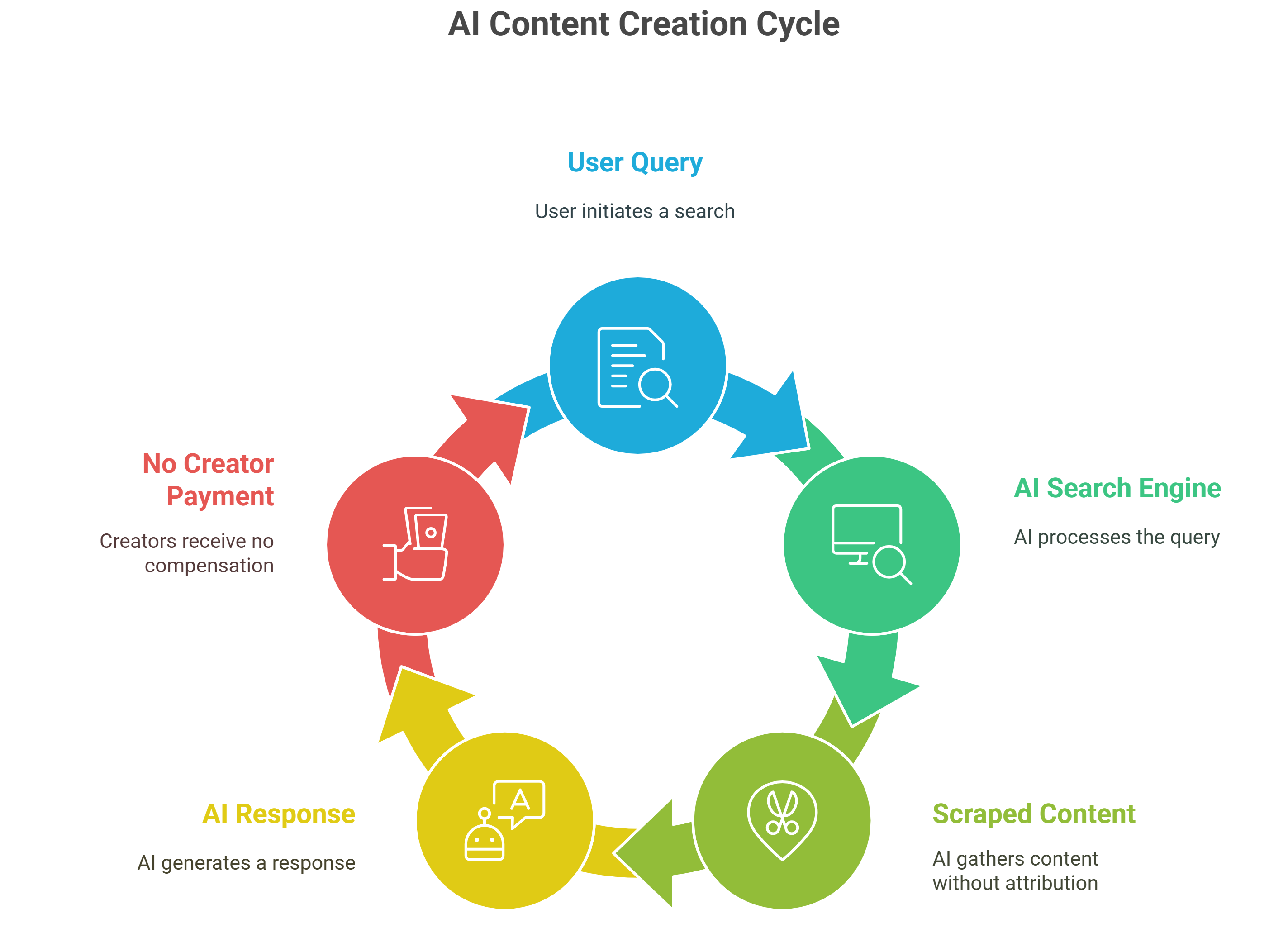
This isn't merely a temporary adjustment to new technology—it represents the systematic dismantling of the economic foundation that has sustained the creator economy for the last two decades. The traditional pathway from search query to website visit to monetisation has been short-circuited by AI systems that synthesise information from thousands of sources whilst providing no attribution or compensation to the original creators.
The disruption extends far beyond individual creators. According to the same (above) research, major media companies are feeling the impact, with The New York Times' Wirecutter subsidiary reporting a 34% year-over-year decline in affiliate revenue, directly attributing the drop to "AI search cannibalisation." Even established publishers with substantial resources are struggling to adapt their business models to an environment where their content is consumed without generating corresponding revenue streams.
The creator economy, currently valued at around $200 billion and previously projected to surpass $500 billion by 2030, stands at an inflection point. Without intervention, we risk the collapse of the incentive structure that motivates individuals to produce the high-quality content that AI systems themselves depend upon—creating an unsustainable parasitic relationship that benefits platforms whilst impoverishing creators.
Current Solutions: Too Little, Too Late
Existing responses to this crisis fall short of addressing the scale and urgency of the problem. Perplexity AI's Publishers' Program, launched as one of the first systematic attempts at revenue sharing, covers only six major publications, including TIME, Der Spiegel, and Fortune. Whilst this represents progress, it leaves millions of individual creators and smaller publishers without access to compensation mechanisms.
The direct licensing approach favoured by major media companies requires substantial negotiating power and legal resources that individual creators simply don't possess. OpenAI's $250 million in licensing deals with News Corp and other major publishers demonstrates the viability of compensation frameworks, but these agreements remain accessible only to large organisations with existing industry relationships.
The fundamental problem isn't technological feasibility—it's a question of scale and bargaining power. AI companies prefer working with large content providers who can offer substantial volumes of material, creating a two-tier system where major publishers secure protection whilst individual creators remain vulnerable to continued exploitation.
Current attribution technologies, such as those developed by ProRata for calculating "attribution percentages," prove that technical solutions exist for fair compensation. However, these innovations remain trapped within limited partnerships rather than becoming industry-wide standards that protect all content creators.
The Badge Model: A Comprehensive Solution
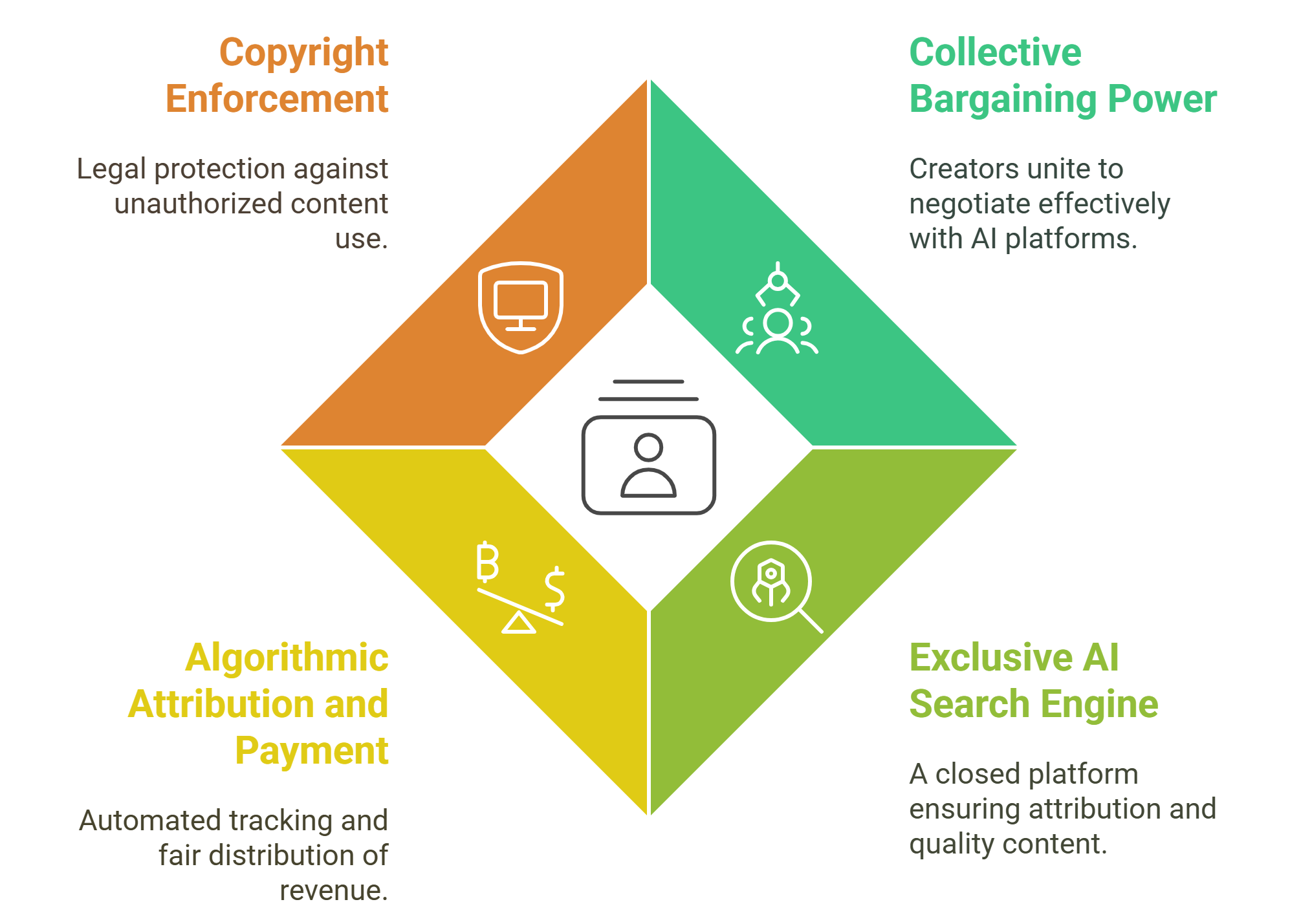
Imagine a system that functions like Visa or Mastercard—not for payments, but for content attribution and protection in the age of AI. This "badge" service would revolutionise creator economics by combining four essential functions: content aggregation, exclusive AI search, algorithmic attribution, and copyright enforcement.
The Four Pillars of the Badge System
Pillar One: Collective Bargaining Power Individual creators would join the badge service, contributing their content to a collectively managed pool that achieves the scale necessary for meaningful negotiations with AI platforms. This aggregation model overcomes the volume requirements that currently exclude smaller creators from licensing opportunities whilst maintaining individual creator autonomy over participation decisions.
Pillar Two: Exclusive AI Search Engine The service would operate its own AI search platform, similar to Gist.ai, that exclusively utilises content from verified badge members. This closed ecosystem guarantees attribution and maintains content quality whilst providing users with reliable, properly sourced information. Unlike traditional AI search engines that scrape content without permission, this platform would demonstrate the value proposition of properly licensed, attributed content.
Pillar Three: Algorithmic Attribution and Payment Building upon ProRata's pioneering work in attribution technology, the system would track content usage within AI responses and automatically distribute payments to creators based on actual contribution percentages. If an AI response about running shoes draws 33% of its content from a particular review article, that creator would receive 33% of the revenue generated by that response.
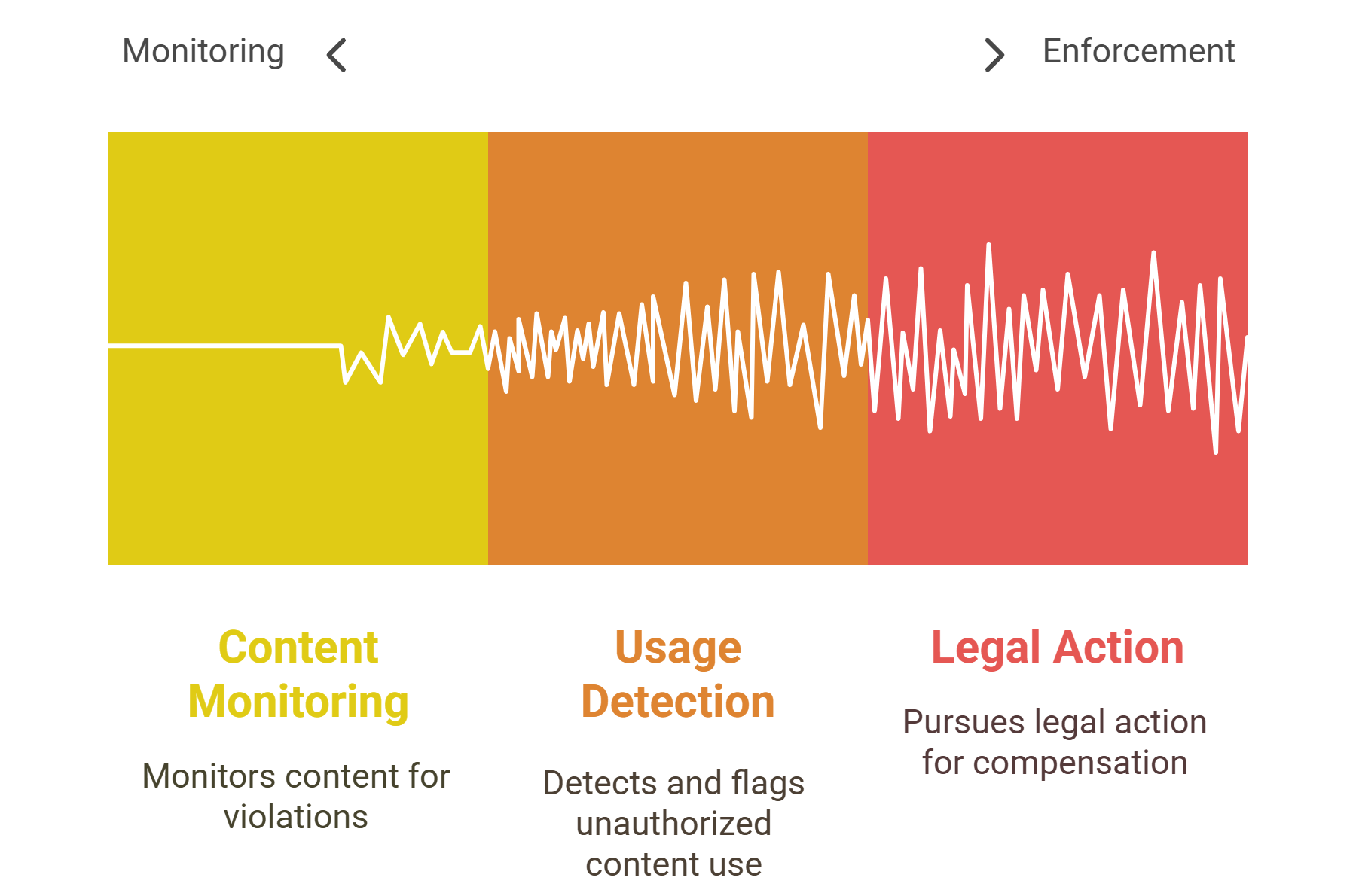
Pillar Four: Copyright Enforcement The service would actively monitor other AI platforms to detect unauthorised use of its members' exclusive content, pursuing compensation through legal channels whilst protecting individual creators from the costs and complexity of copyright enforcement. This function would provide individual creators with the legal protection they could never afford independently.
Proposed System: Challenges and Solutions
The badge model faces three primary implementation challenges, each requiring specific strategic responses.
Technical Complexity: Building competitive AI search infrastructure demands significant investment in machine learning expertise and computational resources. However, partnerships with existing AI companies or cloud platforms could provide necessary technical capabilities without requiring complete in-house development.
Market Adoption: Convincing both creators and users to participate requires demonstrating clear value propositions. Creators need guaranteed income improvement, whilst users need superior search quality. Early partnerships with influential creators and aggressive marketing of search quality advantages could drive initial adoption.
Competitive Response: Major tech companies will likely respond with competing creator compensation programmes. However, first-mover advantages in creator relationships, combined with exclusive content agreements and patent protection for attribution technology, could create defensible competitive moats.
The Window Is Closing
The opportunity to establish creator-friendly economic frameworks exists today but may not persist indefinitely. As AI search market share grows exponentially and legal precedents solidify in favour of established platforms, the window for innovative solutions narrows rapidly.
Early action provides three critical advantages: first, access to the highest-quality creators before exclusive agreements with major platforms, establishment of technical and legal precedents that favour creator compensation, and market positioning before competitive responses eliminate differentiation opportunities.
The choice facing the creator economy is stark: embrace systematic change that ensures fair compensation for the digital content powering our information age, or accept gradual economic displacement without recourse. The badge model offers a pathway toward sustainable creator economics that benefits all participants—but only if implemented before existing power structures become entrenched.
Millions of creators shouldn't have to choose between creating quality content and earning sustainable income. The badge revolution could ensure they never have to.